Description
Chartwell Green uPVC Casement Window with Twin Top Lights — Traditional Proportions, Targeted Ventilation
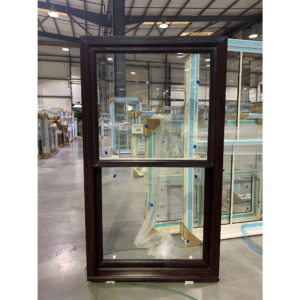
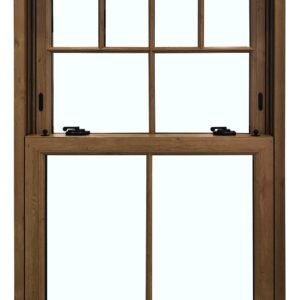
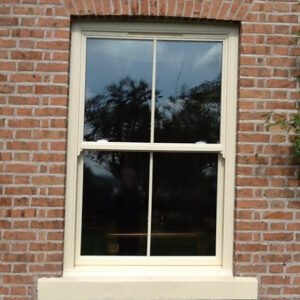
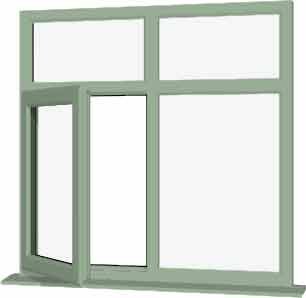
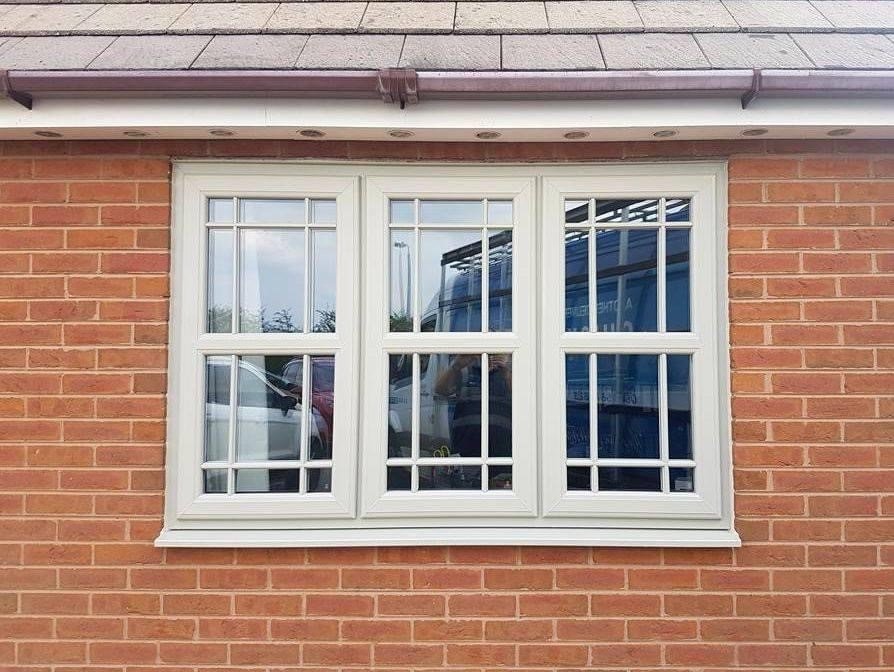
A horizontal rail running continuously across the full width of a window frame is one of the most enduring features of traditional British window design — dividing the frame into an upper and lower zone, creating a set of proportions that connects the window to centuries of domestic architectural practice, and giving the elevation a composed, considered character that a frameless expanse of glass cannot achieve. Our Chartwell Green uPVC Casement Window with Twin Top Lights builds this classic divided-light principle into a four-light combination frame that delivers targeted left-hand ventilation, a clean lower right view, and twin fixed top lights spanning the full upper width — all in a single made-to-measure Chartwell Green unit.
This is a window that earns its place on any elevation through proportion and purpose — and one that performs to full A-rated specification in every section of its four-light frame.
Twin Top Lights — Full Width, Upper Zone
The two fixed top lights that occupy the upper section of this window are the element that most directly defines its architectural character. Sitting above the continuous horizontal rail that crosses the full internal width of the frame, they span the complete upper zone from the left outer stile to the right outer stile — left top light above the casement section, right top light above the fixed lower pane section — at the same height, in the same profile, with the same slim Chartwell Green border.
The horizontal continuity of the twin top lights is what gives this window its particular presence on an elevation. Unlike combination windows where the upper section is divided into active and passive zones by different opening styles, the twin fixed top lights here present a unified upper band of glazing across the full width — a single visual element at the head of the frame that ties the lower left and lower right sections together into a cohesive whole. From the street, the window reads as a considered, balanced composition rather than an asymmetric arrangement of opening and fixed lights.
Within the room, the twin top lights contribute natural light to the upper zone — the ceiling and the upper walls — in a way that makes the interior feel taller and more generously illuminated than a window without an upper section would allow. This upper zone illumination is particularly valuable in rooms with standard ceiling heights, where a window that only glazes the lower portion of the wall can leave the ceiling feeling dim and the room feeling compressed. The twin top lights address this directly, brightening the ceiling and creating the sense of vertical expansion that good upper lighting produces.
Lower Left Casement — Ventilation Where It Is Needed
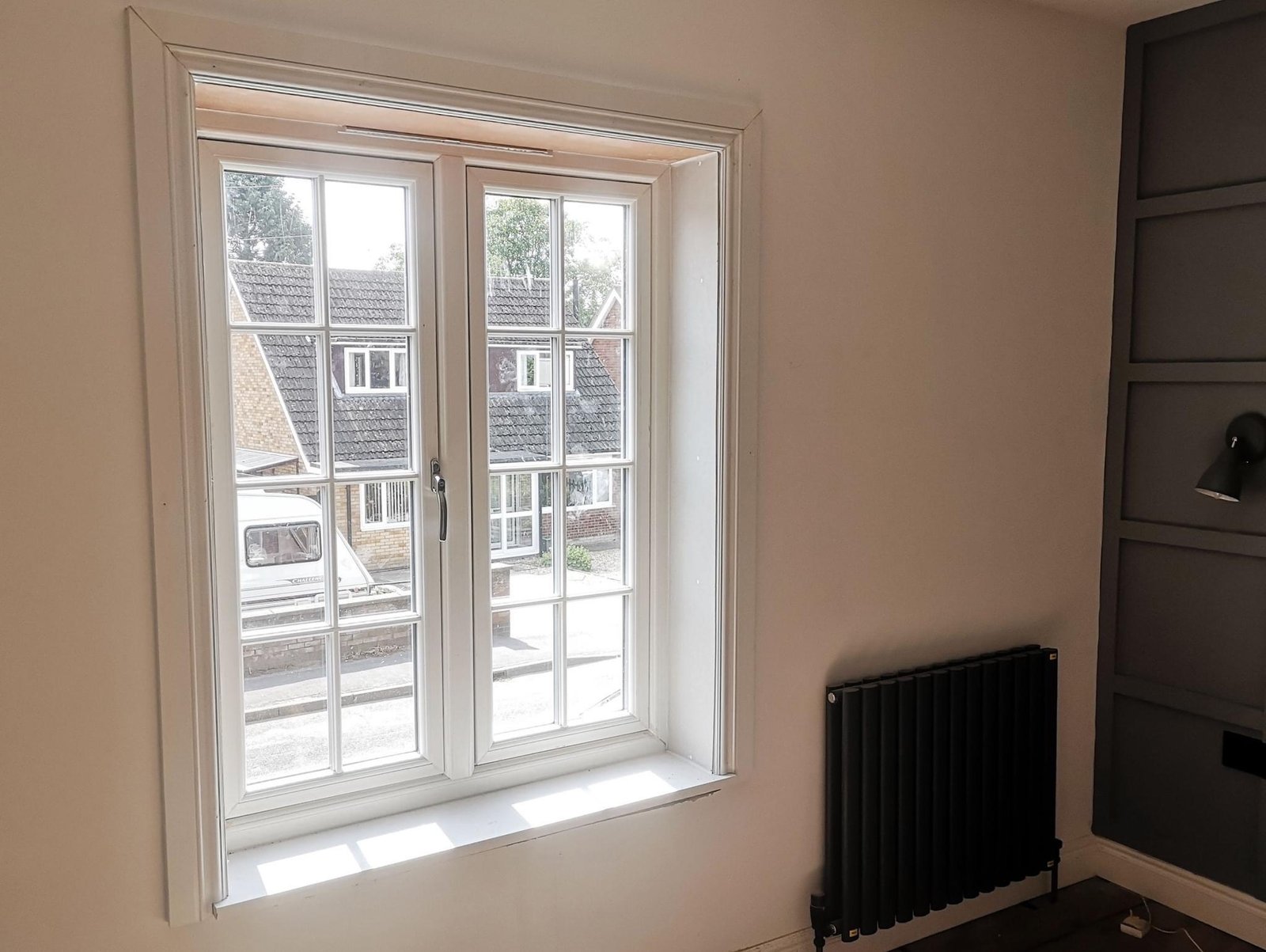
The side-hung casement in the lower left section is the working light of this window — the element that ventilates the room and connects the inside of the building to the outside air. Hinged on its left edge, it swings fully outward when ventilation is needed, creating a generous opening at mid-to-lower frame height that delivers fresh air directly into the occupied zone of the room.
The positioning of the casement in the lower left section is significant. At this height and on this side of the frame, the open casement directs incoming air across the width of the room rather than channelling it toward a single corner — drawing fresh air in on the left and allowing it to circulate rightward through the space before exiting through other openings. For rooms where the furniture layout concentrates occupants toward the right side of the window — a sofa against the right wall, a dining table below the right section — this left-hand ventilation direction delivers fresh air across the occupied zone more effectively than a right-hand casement would.
The casement operates completely independently of the fixed top lights above it. It can be opened to any degree from a narrow crack to its full extent, and locked in the closed position with a multi-point locking system and lockable push-button handle that provide robust security at every position.
Lower Right Fixed Pane — View Without Hardware
The full-height fixed pane in the lower right section completes the four-light composition without introducing any mechanical complexity. Spanning from just above the sill to the underside of the right top light above it, it delivers a clean, unobstructed view at seated and standing eye level across the right side of the opening — no handle, no hinge indicator, no visible frame element interrupting the glazed area at the height where the outlook is most directly experienced.
For rooms that face a garden, a courtyard, or any outdoor space worth looking at undisturbed, the fixed lower right pane ensures the right side of the window is given entirely to the view. The contrast between the active lower left section — with its casement, its handle, and the slight visual interest of an opening light — and the passive lower right section creates a compositional balance that the twin top lights above reinforce by spanning both sections equally at the upper level.
A Continuous Horizontal Rail Across the Full Width
The horizontal rail that runs from the left outer stile to the right outer stile at the same height across the full internal width of the frame is the single most important design element in this window — and it is one that many combination window configurations cannot achieve because their opening and fixed sections use different sash heights.
In this four-light design, the horizontal rail sits at the same height on both sides because the upper section — twin fixed top lights — is the same depth across the full width. This allows the rail to run continuously from edge to edge without stepping, offsetting, or breaking at the central mullion. From outside the property, this continuous rail gives the window a strong, clean horizontal line that reads with architectural confidence. From inside the room, it creates a clear visual division between the upper light zone and the lower view and ventilation zone that gives the interior a sense of structured, considered natural light distribution.
In the fully sculptured 70mm Chartwell Green profile, this continuous horizontal rail is given the moulded depth and shadow detail that make it a positive design feature rather than a structural necessity. The shadow line cast by the sculpted rail edge across the glazing below it gives the window a three-dimensional character at this junction that flat-profiled alternatives cannot approach.
A-Rated Performance Across All Four Lights
All four panes in this double glazed uPVC window are specified to the same thermal standard. The 70mm multi-chamber uPVC frame, 28mm argon-filled sealed units, soft coat low-E glass, and warm-edge black superspacer bar deliver a U-value of 1.3 W/m²K consistently across every light — including at the horizontal rail, where our multi-chamber construction maintains sealed air chamber thermal resistance rather than allowing a cold bridge to develop across the continuous frame element. Part L Building Regulations are met across the full four-light frame, and the thermal performance is maintained at the same standard in every section — fixed, opening, upper, and lower alike.
Chartwell Green — Heritage Finish on a Classic Form
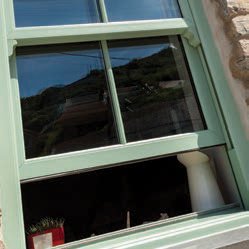
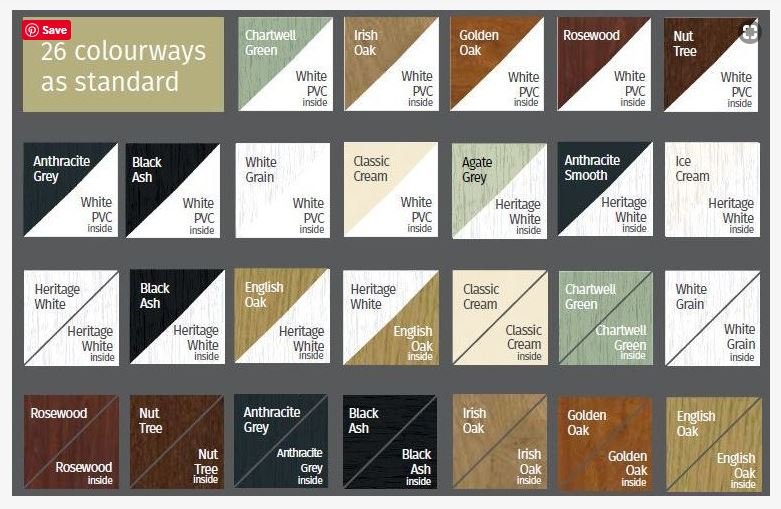
The divided-light casement window — a horizontal rail dividing upper fixed lights from lower opening casements — is one of the most recognisable and most enduring forms in British domestic architecture. In Chartwell Green uPVC, it is given a heritage finish that connects this classic form to the present without any of the maintenance liability that painted timber carries. The soft sage tone of the Chartwell Green frame sits across the four-light composition with the quiet confidence of a colour that belongs on a quality window — warming the elevation without competing with the glazing, and adding the kind of character that increases the perceived value of the property.
The Chartwell Green finish is co-extruded into the uPVC profile and backed by a full 10-year profile guarantee against fading, peeling, warping, and discolouration. These uPVC casement windows require no painting, no staining, and no maintenance beyond an occasional wipe with a damp cloth — across all four panes, the horizontal rail, the central mullion, and the outer border.
Security Across Every Section
The side-hung casement is secured with a multi-point locking system engaging at multiple points along the height of the opening light, with a lockable push-button handle fitted as standard. All four panes across the full frame are retained by internal glazing beads, preventing glass removal from the exterior on any section — both fixed top lights, the fixed lower right pane, and the casement sash when closed. Patented double-action bubble gaskets run the full perimeter of the casement, maintaining a consistent weathertight and draught-proof seal in all conditions.
Specification at a Glance
- Energy Rating: A-rated | U-value 1.3 W/m²K
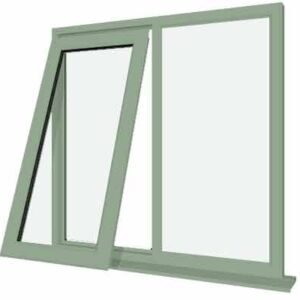
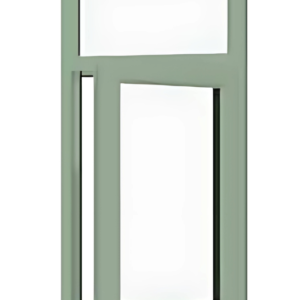
- Configuration: 4-light — fixed top light upper left, fixed top light upper right, side-hung casement lower left, fixed pane lower right
- Frame System: 70mm multi-chamber thermally efficient uPVC
- Glazing: 28mm argon-filled units, soft coat low-E glass, warm-edge superspacer
- Locking: Multi-point locking on side-hung casement
- Handles: Lockable push-button handle as standard
- Beading: Internal across all four panes for maximum security
- Gaskets: Patented double-action bubble gaskets on casement
- Finish: Chartwell Green — guaranteed not to discolour, warp or peel
- Compliance: Part L Building Regulations
- Guarantee: 10-year profile guarantee
Made to Your Exact Measurements
- Frame Width: 415mm – 700mm
- Frame Height: 800mm – 2200mm
Every window is manufactured to order to your precise dimensions. Enter your measurements at checkout for a perfect made-to-measure fit. Our team is available for sizing queries and configuration advice before you place your order.
When Traditional Proportions and Practical Performance Belong Together
The divided-light casement window has endured in British architecture for good reason — the horizontal rail creates proportions that work, the upper lights bring light to the ceiling zone, and the lower casement ventilates the room at the right height. This four-light combination delivers all of that in Chartwell Green uPVC — with A-rated thermal performance, multi-point security, and a profile quality that gives the classic divided-light form the heritage finish it deserves. It is one of the most architecturally grounded and practically resolved designs in our entire Chartwell Green uPVC window range.