Description
Chartwell Green uPVC Twin Casement Window with Mid Rails — Traditional Cottage Character, Modern A-Rated Performance
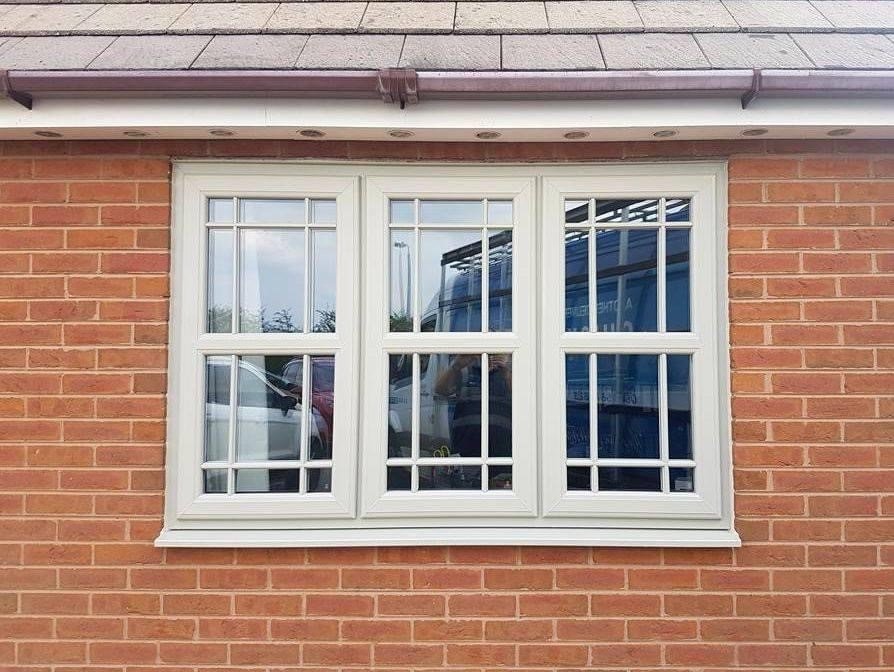
There is a style of window that appears on British houses of every period — from Georgian farmhouses to Victorian terraces to 1930s semis — that divides a pair of opening casements at mid-height with a continuous horizontal rail, creating four panes where two might suffice and giving the window a proportional refinement that undivided casements cannot match. Our Chartwell Green uPVC Twin Casement Window with Mid Rails brings this timeless configuration into the modern era with full A-rated thermal performance, robust multi-point security, and the Chartwell Green heritage finish — delivering the classic divided-light character of traditional British joinery without a single hour of painting or maintenance ever required.
This is one of the most characterful and architecturally grounded configurations in the Chartwell Green range — a window that looks as though it has always belonged on the property it is fitted to, regardless of when that property was built.
The Mid-Rail Divided Casement — A British Tradition
The horizontal mid-rail that divides each casement in this window into an upper fixed light and a lower opening section is the defining design feature — and one with centuries of precedent in British domestic architecture. In the original timber casement windows of the seventeenth and eighteenth centuries, the mid-rail served a structural purpose as well as an aesthetic one, providing a horizontal stiffener across the width of the casement that prevented the sash from racking under its own weight when open. As window manufacturing advanced and structural requirements changed, the mid-rail survived not because it was structurally necessary but because the proportions it created were simply better — more domestic in scale, more connected to the architectural character of British houses, and more refined in the relationship between upper and lower zones of the frame.
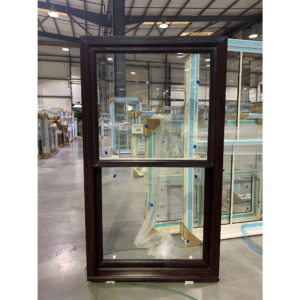
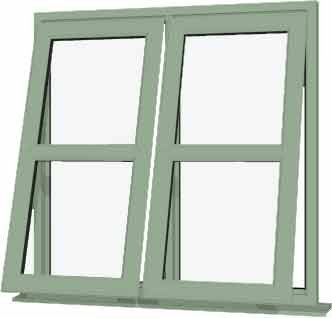
In our four-light twin casement design, the mid-rail runs continuously across the full width of both casements at the same height, creating a single unbroken horizontal line that divides the window into a two-pane upper zone and a two-pane lower zone simultaneously. This continuous rail is the element that gives the window its most distinctive character — the four-pane grid it creates, with the central vertical mullion intersecting the horizontal rail at the midpoint of the frame, is the visual signature of the divided-light British casement.
In Chartwell Green uPVC, this grid of frame elements — vertical mullion, horizontal rail, outer border — is expressed through the fully sculptured 70mm profile with the moulded shadow detail and heritage colour that bring the tradition of timber divided-light joinery into the present without any of its maintenance demands.
Twin Opening Sections — Independent and Bilateral
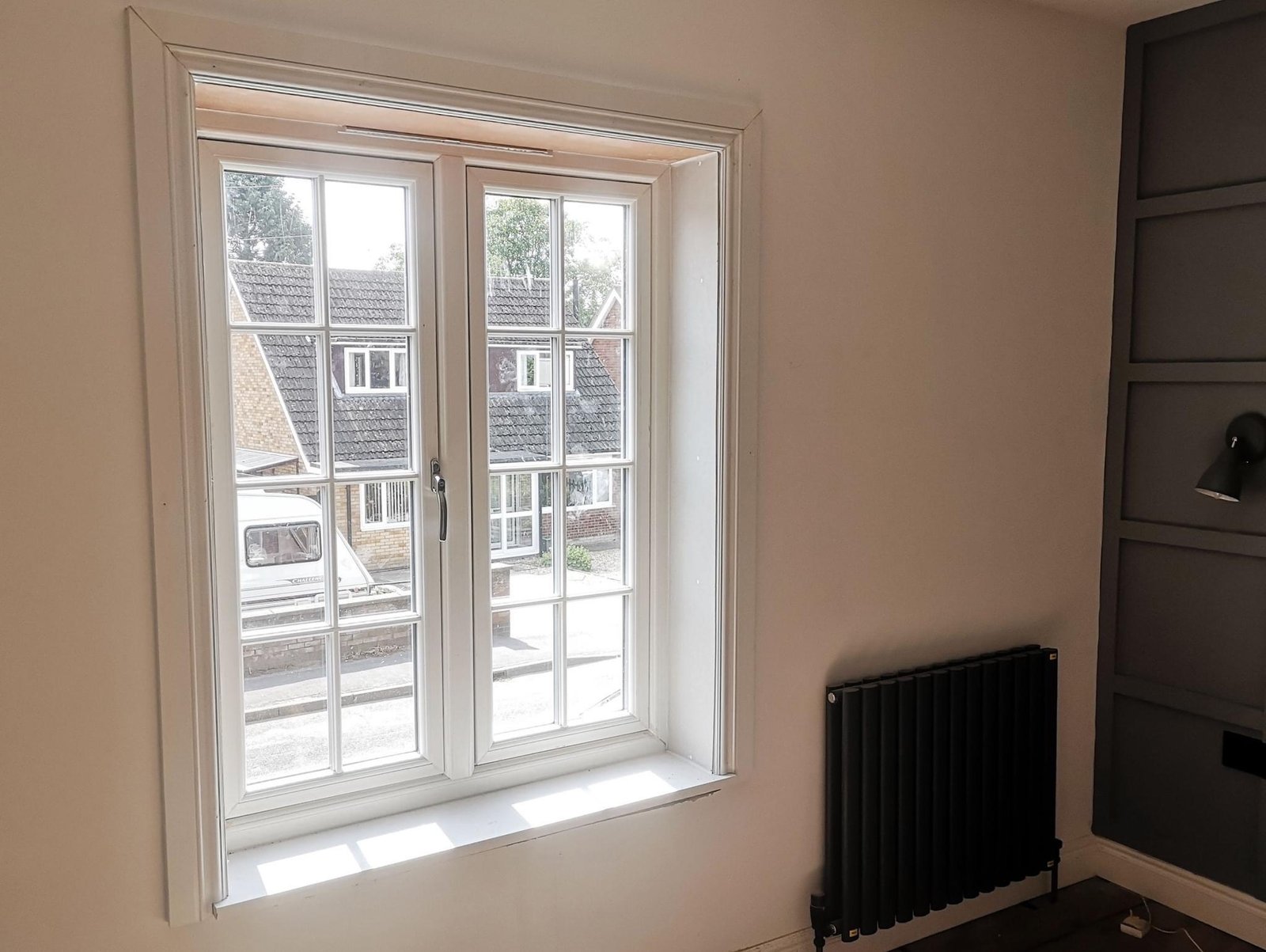
The lower section of each casement is the active opening zone — the part of the window that provides ventilation when the casement is open. Both lower sections are side-hung, hinged on their outer edges and opening outward into the space beyond the frame. The left casement opens on its left-hand hinge, the right casement on its right-hand hinge — when both are fully open simultaneously, the two sashes swing outward in opposite directions from the central mullion, creating a bilateral ventilation arrangement across the full width of the lower section.
This bilateral opening at the lower level is one of the most effective natural ventilation arrangements a casement window can provide. Fresh air enters from both the left and the right simultaneously, meeting at the centre of the room rather than being directed from one side to the other. The balanced inflow from both sides creates more even air distribution across the width of the room than any single-sided casement can achieve — particularly effective in wider rooms where a single casement on one side fails to ventilate the far corners adequately.
Each lower casement section operates completely independently of the other. The left casement can be open while the right is closed — directing airflow from the left side only. The right can be open while the left is closed — directing airflow from the right. Both can be open fully for maximum bilateral ventilation, or both partially open to the same degree for controlled, balanced airflow from both sides simultaneously. This independence gives the occupant a degree of ventilation control that twin casements without mid-rails — where the full casement height must be managed in a single operation — do not provide.
The opening sections are sized to the lower portion of each casement — below the mid-rail, they span the full width of their respective casement from the central mullion to the outer stile, and from the mid-rail down to the sill. This proportioning gives the opening section a generous ventilation area while the upper fixed light above the rail maintains the visual structure of the four-pane grid.
Twin Fixed Upper Lights — Ceiling Zone Illumination
The upper section of each casement is fixed — held permanently in the frame above the mid-rail without any opening mechanism. Both upper fixed lights span the full width of their respective casements from the central mullion to the outer stile, sitting at the same height within the same horizontal zone across the full width of the window.
The twin fixed upper lights contribute natural light to the ceiling zone and upper walls of the room — the zone above the horizontal rail where direct natural light from the upper section of a divided casement makes a qualitatively different contribution to the room’s illumination than the lower casements alone. When the upper lights receive direct sunlight or bright sky light at different times of day from the lower section, the room benefits from a layered, graduated natural light that fills the interior more completely and more evenly than undivided casements opening to the same total height would achieve.
The fixed upper lights also serve to maintain the visual structure of the four-pane grid when the lower casements are open. With both lower sections swung fully outward, a window without upper lights would lose its compositional structure entirely — becoming two open apertures with frame borders and nothing to define the upper zone. The fixed upper lights retain the full four-pane grid character of the frame at every opening position of the lower casements, giving the window a consistent visual presence whether fully open, partially open, or completely closed.
Continuous Mid-Rail — The Proportional Framework
The horizontal mid-rail is the single design element that determines how this window reads on any elevation — and in the fully sculptured 70mm Chartwell Green profile, it is given the precise moulded detail that makes it the most visually impactful element in the frame.
The shadow line cast by the sculpted upper edge of the mid-rail across the lower casement sections below it varies through the day as the sun’s angle changes — a dynamic quality that gives the window a subtle visual presence at different times of day that no flat-profiled frame element can replicate. In the morning, the rail shadow falls steeply across the lower section. At midday, it narrows to a thin line. In the afternoon, it shifts its direction. This variation in shadow profile is one of the qualities that makes sculpted timber window frames so visually interesting — and our fully sculpted 70mm Chartwell Green profile reproduces it in maintenance-free uPVC.
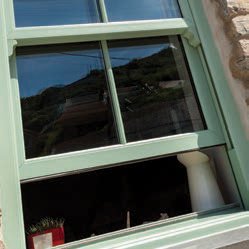
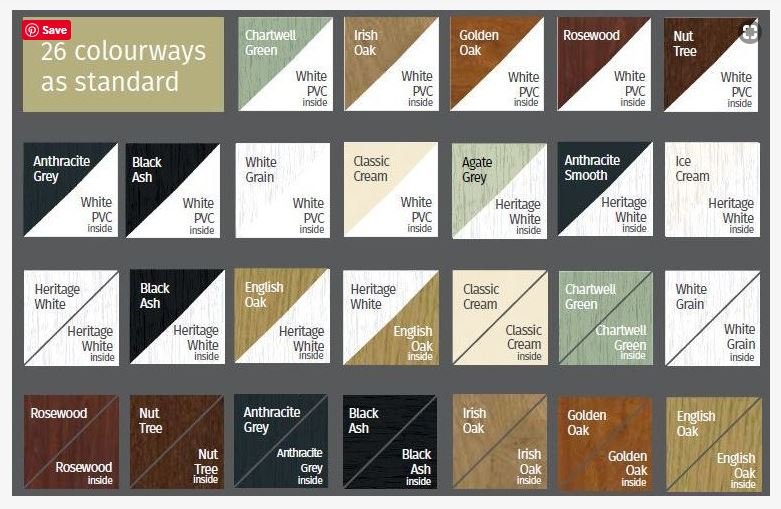
The Chartwell Green finish runs consistently across the horizontal mid-rail, the central vertical mullion, and the outer border — in the soft sage tone that ties the four-pane grid together into a single cohesive composition. The finish is co-extruded into the uPVC profile and backed by a full 10-year profile guarantee against fading, peeling, warping, and discolouration. These uPVC casement windows require no painting, no staining, and no maintenance beyond an occasional wipe with a damp cloth.
A-Rated Performance Across All Four Panes
All four panes in this double glazed uPVC window are specified to the same thermal standard. The 70mm multi-chamber uPVC frame, 28mm argon-filled sealed units, soft coat low-E glass, and warm-edge black superspacer bar deliver a U-value of 1.3 W/m²K consistently across the twin upper fixed lights and the twin lower casement sections — meeting Part L Building Regulations throughout and delivering genuine, sustained reductions in heat loss in everyday use.
The horizontal mid-rail crossing the full internal width of the frame at mid-height is thermally the most demanding element of this window — a continuous frame member with surfaces on both sides of the building envelope, spanning the full width across both casement sections simultaneously. Our 70mm multi-chamber construction maintains sealed air chamber thermal resistance at the mid-rail section with the same consistency as at the outer frame, preventing the cold bridge and condensation strip that develop at horizontal rails in lesser profiles.
Security on Both Opening Sections
Both lower casement sections are independently secured with multi-point locking systems engaging at multiple points along the full height of each opening section from mid-rail to sill. Lockable push-button handles are fitted to both lower casements as standard. All four panes across the complete frame are retained by internal glazing beads, preventing glass removal from the exterior on any section. Patented double-action bubble gaskets run the full perimeter of both lower casement sections, maintaining consistent weathertight and draught-proof seals in all conditions.
Specification at a Glance
- Energy Rating: A-rated | U-value 1.3 W/m²K
- Configuration: 4-light — twin side-hung casements each with upper fixed light and lower opening section, continuous horizontal mid-rail
- Frame System: 70mm multi-chamber thermally efficient uPVC
- Glazing: 28mm argon-filled units, soft coat low-E glass, warm-edge superspacer
- Locking: Multi-point locking on both lower casement sections
- Handles: Lockable push-button handles on both lower casements
- Beading: Internal across all four panes for maximum security
- Gaskets: Patented double-action bubble gaskets on both opening sections
- Finish: Chartwell Green — guaranteed not to discolour, warp or peel
- Compliance: Part L Building Regulations
- Guarantee: 10-year profile guarantee
Made to Your Exact Measurements
- Frame Width: 415mm – 700mm
- Frame Height: 800mm – 2200mm
Every window is manufactured to order to your precise dimensions. Enter your measurements at checkout for a perfect made-to-measure fit. Our team is available for sizing queries and configuration advice before you place your order.
When Traditional Proportions and Modern Performance Belong on the Same Window
The divided-light twin casement with mid-rail is one of the most enduring window forms in the British built environment — present on properties of every period, in every region, on every elevation type. In Chartwell Green uPVC, it receives the heritage colour and the A-rated thermal specification that give this traditional form its best possible contemporary expression. Twin independent lower casements for bilateral ventilation control. Twin fixed upper lights for ceiling zone illumination and consistent four-pane visual character. A continuous horizontal mid-rail giving the frame its defining proportional refinement. And the Chartwell Green finish tying the whole divided-light composition together with the quality and character it has always deserved. It is one of the most architecturally authentic and thermally accomplished designs in our entire Chartwell Green uPVC window range.